Cotton
Handloom Cotton Sarees
Crisp, breathable, the saree that lives in everyday Indian life.
Our Cotton sarees come from three regions: Kerala kasavu with its unbleached body and gold zari border, Bengali jamdani with hand-drawn motifs, and Chettinad cotton with bold checked borders. Each is woven on a pit loom by an artisan cooperative.
Origin
Where it comes from
India was weaving cotton before the Roman empire imported it. The handloom cotton saree is the original drape — what most Indian women wore daily until the 1970s. We're part of a small movement working to restore that lineage.
The Weave
How to read a real one
Look for the irregularities. Hand-loomed cotton has small slubs and tiny thread breaks; mill-cotton is uniform. The selvedge (edge) of a real handloom is hand-finished, never serged.
From the archive
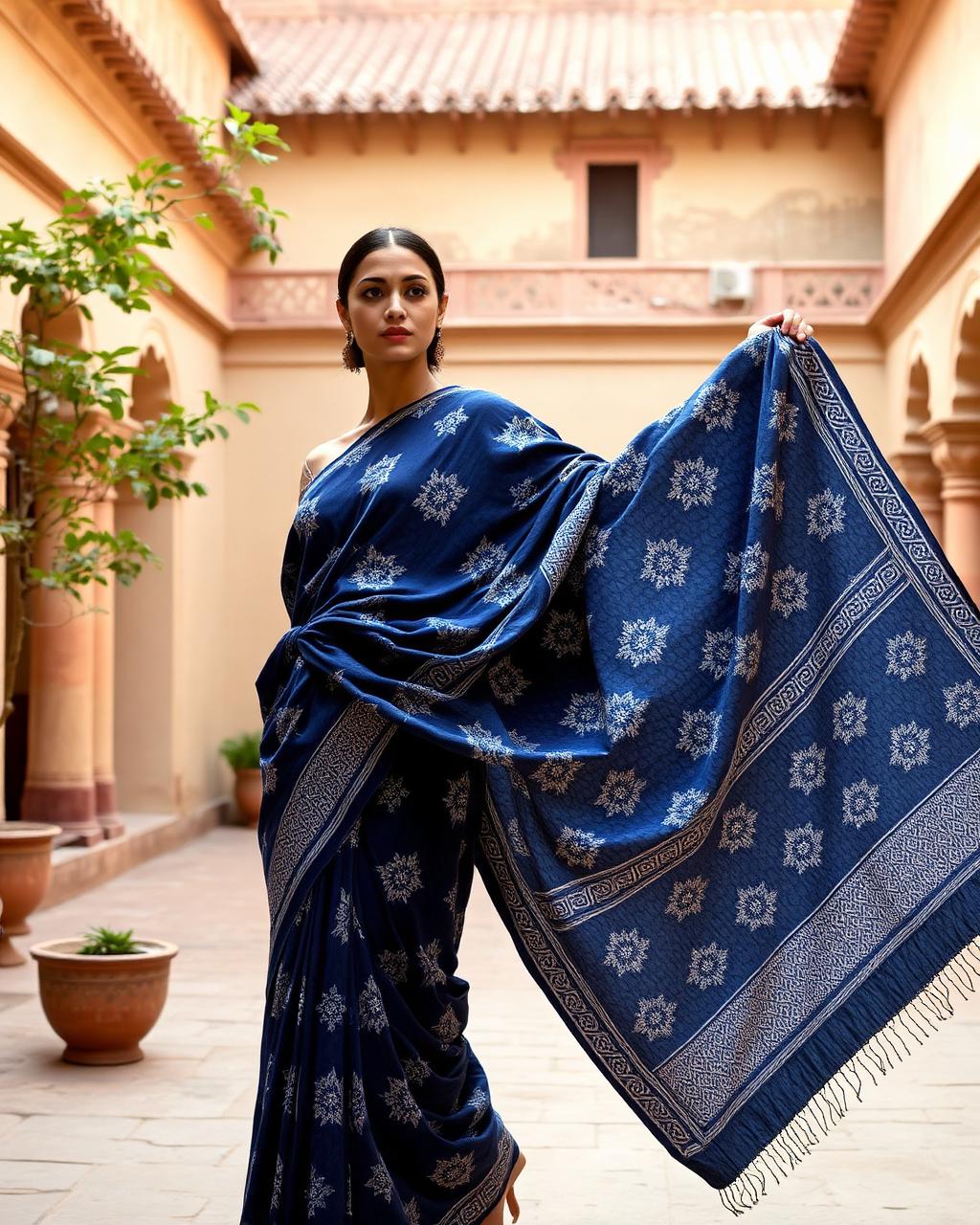
In cotton
Styling
How to wear it
- A white kasavu with a deep gold border is Kerala's Onam drape — pair with mullappoo (jasmine) in the hair.
- Bengali tant or jamdani sarees layer beautifully with terracotta jewellery for festive lunches.
- Chettinad checks read well at work with simple silver jhumkas and a leather watch.
Care
How to keep it
- Hand wash separately in cold water for the first three washes to set the dye.
- Dry in shade — direct sun fades natural dyes within months.
- Iron on medium heat while slightly damp for the signature handloom crispness.
Questions
What brides and collectors ask
Does handloom cotton shrink?
Yes, slightly — about 2 to 3 percent in the first wash. Always wash cold and never use a tumble dryer.
Is a Kerala kasavu the same as a Kerala cotton saree?
Kasavu specifically refers to the gold zari border woven into Kerala cotton. A kasavu saree is the off-white-and-gold drape worn for Onam, Vishu and weddings in Kerala.
Can I wear cotton sarees to formal events?
Yes, when the cotton is fine and the drape is correct. A starched Bengali jamdani or a kasavu with a silk blouse is fully appropriate for daytime weddings.