Kanjivaram Silk
Kanjivaram Silk Sarees
Three threads of mulberry silk, one of gold. Made to last lifetimes.
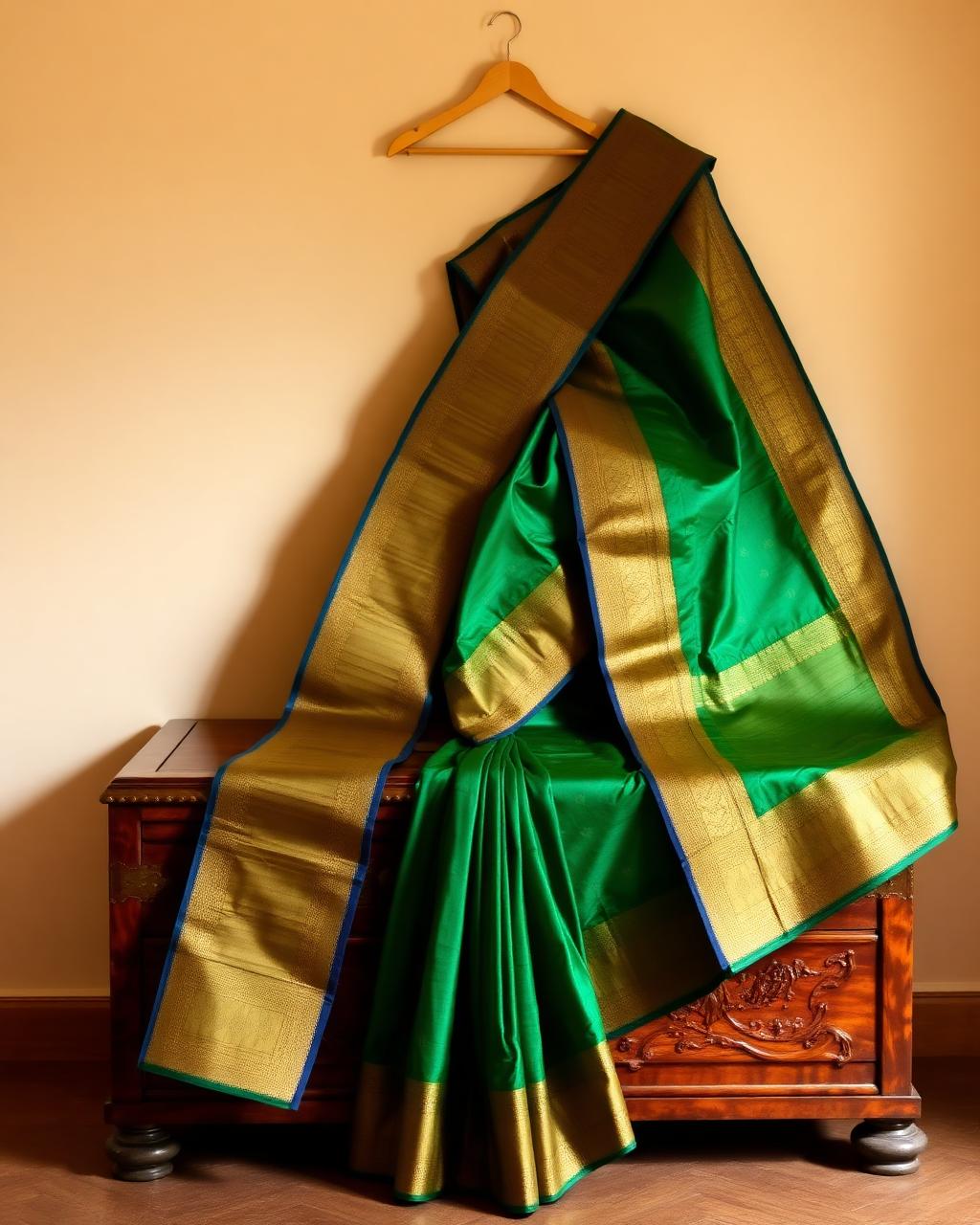
A true Kanjivaram is woven from three single threads of mulberry silk twisted with one thread of silver wire dipped in gold. The body and the pallu are woven separately and joined by a technique called korvai — the seam so fine it survives generations of wear.
Origin
Where it comes from
Kanjivarams come from Kanchipuram in Tamil Nadu, a town that has woven silk since at least the 7th century. The motifs — temple gopurams, peacocks, the mango — are drawn directly from Pallava and Chola temple architecture.
The Weave
How to read a real one
The hallmark is the contrast border and pallu: a Kanjivaram pallu is woven as a separate piece and joined to the body, which is why the colours can be so boldly opposed. Tap the silk; pure mulberry sounds soft and dense, never papery.
From the archive
In kanjivaram silk
Styling
How to wear it
- A red-and-green Kanjivaram with a temple border is the canonical South Indian bridal drape — pair with kemp jewellery and a jasmine veni.
- A blue body with ochre pallu reads beautifully for receptions and sangeets.
- For grand temple visits, choose mustard or ivory with traditional rudraksha motifs.
Care
How to keep it
- Dry clean only. Even a single drop of water leaves a permanent ring on Kanjivaram silk.
- Iron on the lowest setting with a cotton press cloth between iron and silk.
- Store wrapped in muslin with the pallu folded inside. Re-fold every three months.
Questions
What brides and collectors ask
What's the difference between a Kanjivaram and a Banarasi?
Kanjivarams are heavier, made for grand ceremonies, with bold contrast borders. Banarasis are typically lighter and feature intricate Mughal-influenced floral work woven directly into the body.
Why are Kanjivarams so expensive?
Real Kanjivarams use pure mulberry silk and real zari (silver dipped in gold). A single bridal piece can take 15 to 20 days of continuous weaving by two artisans.
How do I store a heavy Kanjivaram so it doesn't tear at the folds?
Refold the saree along different lines every three months. For heirloom pieces, store rolled on an acid-free tube instead of folded.