Organza
Organza Sarees
Stiff, sheer, romantic — silk spun into air.
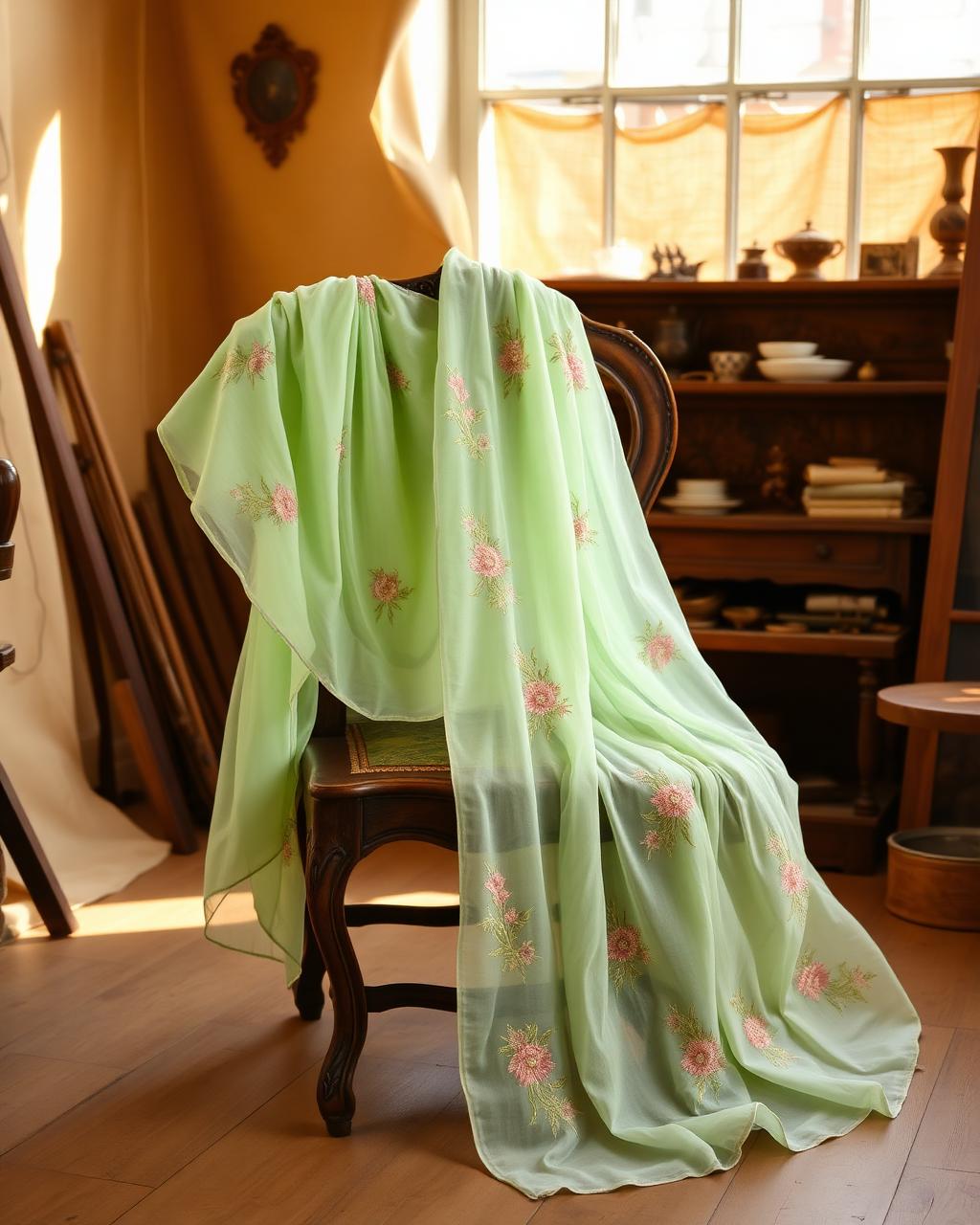
Organza is silk woven so loosely it holds its own structure, almost like a sculpted veil. Our Organza sarees are hand-embroidered in Kolkata with floral aari work, dori applique, or French knots — never printed, never machine-laid.
Origin
Where it comes from
Silk organza originated along the Yangtze in China and travelled the Silk Road to India. Today the finest organza fabric is mill-woven in Bangalore from pure mulberry silk; the artistry lies in the hand-embroidery that follows.
The Weave
How to read a real one
True silk organza has a faint sheen and crisp body — synthetic organza is uniformly stiff and noisy. Hold it to light: pure silk shows a soft, irregular grain; polyester is uniform.
From the archive
In organza
Styling
How to wear it
- An ivory organza with pastel floral embroidery is the modern alternative to lehengas for sangeets and engagements.
- Drape with a contrast satin blouse — emerald, wine, or copper — to anchor the sheer body.
- Pair with diamond studs and a low chignon for a cocktail dinner.
Care
How to keep it
- Dry clean recommended for embroidered pieces. Hand-wash only if the saree is plain.
- Never wring — press between towels and dry flat.
- Iron on the lowest setting with a pressing cloth; steam from a distance to avoid flattening the embroidery.
Questions
What brides and collectors ask
Will my organza saree lose its stiffness over time?
Yes, slightly. The crispness can be restored at a couture cleaner with a silk-safe sizing finish. Never starch at home.
Is organza comfortable to wear in Indian summers?
Surprisingly yes — the sheer weave allows airflow, and silk regulates temperature naturally. Most brides choose organza for daytime sangeets in May and June.
How do I stop my organza from snagging on jewellery?
Wear bracelets and rings after the saree is fully draped. Avoid embroidered cuffs and rough zari blouses underneath.